


By Denise Davis, REALTOR® | Fresh Start Realty | Serving Greenville & Pitt County, North Carolina
You check your score in your banking app, see a number, and then a lender tells you something different. What gives? If you are wondering what credit score is used to buy a house, you are not alone. This guide explains how lenders pull your credit, why the mortgage score vs. credit score gap exists, and the other qualifications for home loans that matter just as much.
What Credit Score Is Used to Buy a House?
When buying a house, lenders pull your credit reports and scores from the three major credit bureaus: Equifax, Experian and TransUnion. Most lenders then use the middle score of the three. If you apply with a co-borrower, each person has a middle score, and the lender decides how to use them (more on that below).
The score a lender uses is also often a different scoring model than the free one you see on a credit card statement. That is the answer to "when buying a house what credit score is used?": your middle score, from the model your lender and loan program require.
Want the minimums by loan type? See our guide to the credit score needed to buy a house in North Carolina.
Mortgage Score vs. Credit Score: Why the Numbers Are Different
The mortgage score vs. credit score question comes up all the time. Here is what is going on:
- Different models. Mortgage lenders have traditionally relied on specific versions of the FICO scoring model, which can differ from the versions used by banks, credit card apps and free monitoring tools. Scoring rules are also evolving: the Federal Housing Finance Agency now allows lenders to use Classic FICO or VantageScore 4.0 for loans sold to Fannie Mae and Freddie Mac. Ask your lender which model they use.
- Different timing. Your score changes as balances and accounts update, so a number from last month may not match today's pull.
- Three bureaus, three scores. Each bureau may have slightly different information on you.
It is common for your credit score for a mortgage to land lower or higher than the number you saw online. myFICO explains what goes into your score if you want to see the pieces. So when you ask, "what is my credit score for a mortgage?", the real answer comes from a lender's pull.
Pulling Credit for a Mortgage: What Is a Hard Inquiry?
Pulling credit for a mortgage is a hard inquiry, which can cause a small, temporary dip in your score. The good news: when you shop for a mortgage, scoring models typically count multiple mortgage inquiries made within a short window (often 14 to 45 days, depending on the model) as a single inquiry. That means you can compare lenders without wrecking your score. Just do your shopping close together.
If you are planning ahead, pull your free reports at AnnualCreditReport.com before you apply. Looking at your own reports does not hurt your score.
Can You Combine Credit Scores to Buy a House?
Short answer: scores are not literally added together. Many buyers ask, "Can you combine credit scores to buy a house?" Here is how it generally works. Each borrower has a middle score. Historically, the lender used the lower of the two people's middle scores. Some newer automated underwriting methods average the scores instead. Some programs still use the lowest score; for example, North Carolina's NC Home Advantage Mortgage uses the lowest qualifying score among all borrowers. Ask your lender which method applies to your loan.
A co-borrower can still help by adding income and lowering your debt-to-income ratio. If your score is the challenge, read our guide to buying a house with bad credit for cosigner and low-score options.
What Do Lenders Look at When Buying a House?
Your score is only one piece. When you ask what lenders look at when buying a house, expect them to review:
- Credit history and score: on-time payments, balances, collections and past bankruptcies.
- Income and employment: usually two years of steady work history, plus pay stubs, W-2s and tax returns. Recent graduates and people who changed jobs in the same field can often still qualify. Here's what documents your mortgage lender will ask for.
- Debt-to-income ratio (DTI): your monthly debts compared to your gross income. Many lenders like to see DTI below roughly 43% to 45%, and some programs allow more with strong compensating factors. The CFPB explains how debt-to-income ratio works.
- Down payment and cash reserves: what you are putting down and what you have left afterward.
- The property itself: an appraisal and, often, flood zone status. Around Pitt County, check flood zones early. See our post on flood zones and flood insurance in Pitt County.
The Consumer Financial Protection Bureau has a helpful overview in its Owning a Home tools.
How Much Credit History Is Needed to Buy a House?
There is no single answer to how much credit history is needed to buy a house. Many lenders like to see a few open accounts with a year or two of on-time payments. If you have a thin file, some FHA and conventional lenders can manually underwrite using nontraditional credit like rent, utilities and insurance payments. That can help buyers who ask, "Do you need credit to buy a house?" Not every lender offers it, so ask up front.
Qualifications for Home Loans and First-Time Home Buyer Requirements
Here are the typical qualifications for home loans and first-time home buyer requirements to prepare for:
- A credit score that meets your loan type's minimum (see the lowest credit score by loan type)
- Steady, documentable income
- A manageable debt-to-income ratio
- Funds for a down payment and closing costs
- Occupancy as your primary home (for most first-time buyer programs)
North Carolina first-time buyers may also qualify for down payment help through the North Carolina Housing Finance Agency (NCHFA), which usually requires a 640 score and has income and price limits. Learn more in our post on first-time homebuyer assistance programs in North Carolina. Some programs also require a homebuyer education class.
Credit is only one part of being ready. For the full checklist, read how to know if you're financially ready to buy a house.
How Much Can I Get Approved For on a Home Loan?
A common question is "How much can I get approved for a home loan?" The answer depends on your income, debts, credit score, down payment and interest rate. A rough rule of thumb many lenders use: monthly housing costs near 28% of gross income, and total monthly debts near 36% to 43%. Your approval may be higher or lower depending on the program. Pre-approval from a lender is the only way to get a real number, and it is smart to get one before you start touring homes in Greenville or Winterville.
Keep in mind that the amount you're approved for isn't always the amount you'll be comfortable paying. See how much house you can comfortably afford.
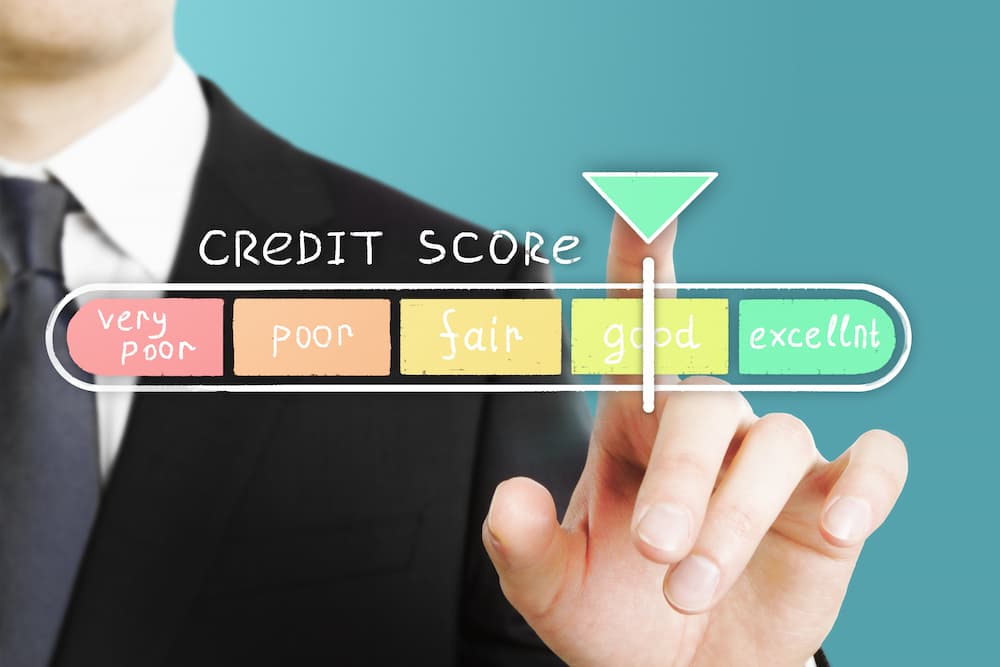
Credit Rating for a Mortgage: What Score Ranges Mean
Lenders look at your credit rating for a mortgage in tiers. As a general guide, using common FICO score ranges:
| FICO score range | Rating | What it usually means for a mortgage |
|---|---|---|
| 800 to 850 | Exceptional | Qualifies for the best available rates and terms |
| 740 to 799 | Very good | Typically qualifies for the best or near-best rates |
| 670 to 739 | Good | Qualifies for most loan programs, often with competitive rates |
| 580 to 669 | Fair | FHA and some other programs may be available, usually at higher rates |
| 300 to 579 | Poor | Limited options; FHA with 10% down may be possible at 500 or above |
Ranges vary by model, and lenders set their own cutoffs, so treat this as a guide only.
What Credit Score Is Used When Buying a House: FAQs
Do lenders use FICO or VantageScore?
Traditionally, mortgage lenders have relied on FICO models. The Federal Housing Finance Agency now allows lenders to use either Classic FICO or VantageScore 4.0 for loans sold to Fannie Mae and Freddie Mac, but not every lender has switched. Ask your lender which score they will pull.
Does checking my own credit hurt my score?
No. Checking your own reports is a soft inquiry and does not affect your score.
Will shopping for a mortgage hurt my credit?
Multiple mortgage inquiries in a short window are typically counted as one, so compare lenders within a couple of weeks.
Should I check my credit before I start house hunting?
Yes. It gives you time to fix errors and raise your score before applying.
Get Pre-Approved and Start Your Pitt County Home Search
Understanding which score lenders use takes the mystery out of the process. When you are ready, Fresh Start Realty can recommend local lenders and help you search homes across Greenville and all of Pitt County. Start at Pitt County Living or contact Fresh Start Realty at 252-902-9006 or denisedavis@pittcountyliving.com to talk through your next step.
This article is general information, not financial or legal advice. Loan rules and lender requirements change, so confirm current details with a licensed mortgage lender.
Keep Reading
- What Credit Score Do You Need to Buy a House in North Carolina? Minimums by Loan Type
- Buying a House With Bad Credit: Mortgage Loans for Bad Credit in Pitt County, NC
- Home Buying Process in North Carolina
- How Do You Read a Home Inspection Report?

Denise Davis, REALTOR®
Fresh Start Realty
Serving Greenville & Pitt County, North Carolina
📞 Phone: 252-902-9006
✉️ Email: denisedavis@pittcountyliving.com
🌐 Website: https://www.pittcountyliving.com